
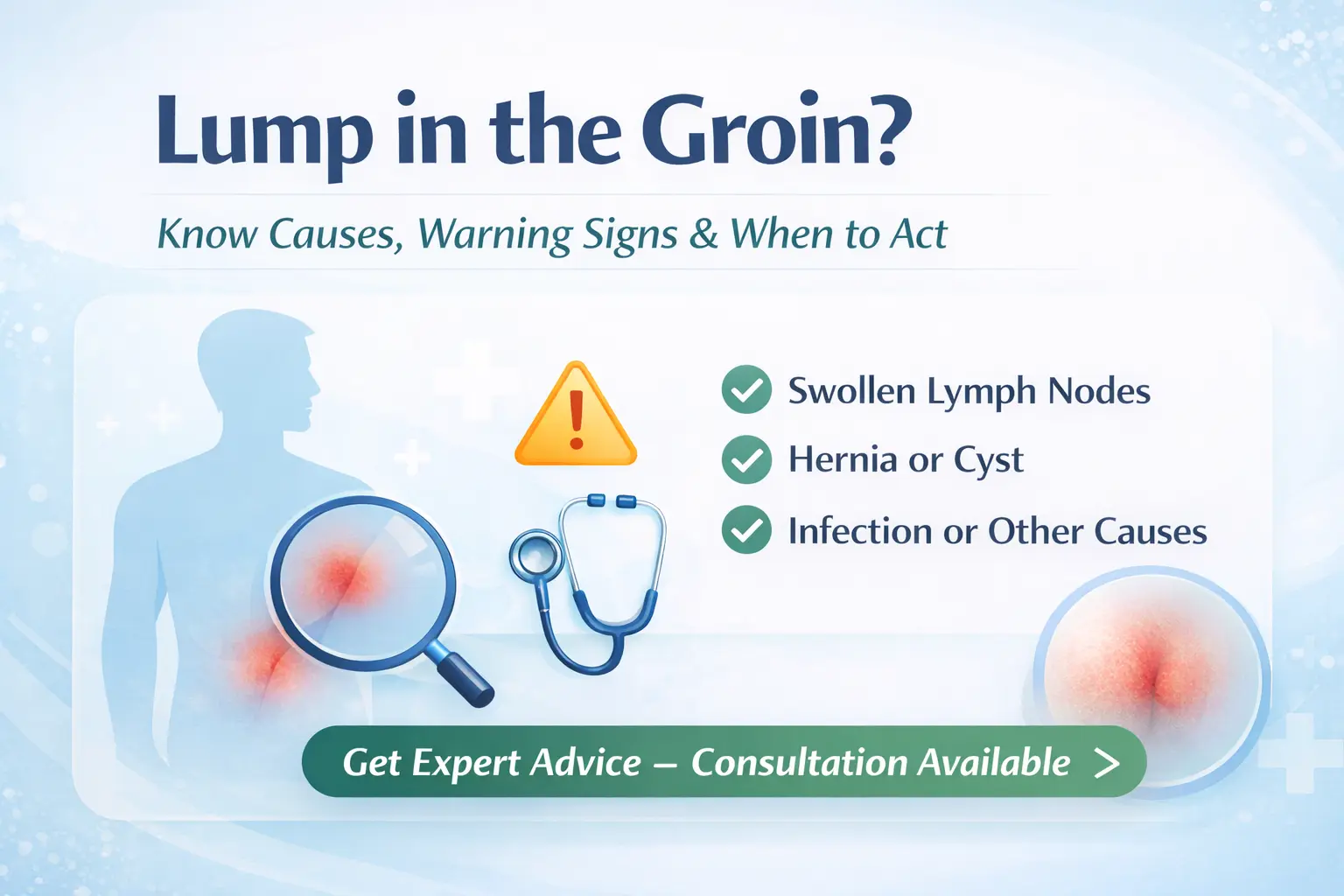
A lump in the groin is commonly caused by swollen lymph nodes, infections, hernias, or cysts. In most cases, it is harmless, but persistent, hard, or growing lumps may require medical evaluation. Early diagnosis helps identify serious conditions like hernia or, rarely, cancer.
What is a Lump in the Groin?
A groin lump is a swelling or bump that appears in the area between the abdomen and thigh. It can feel soft, hard, movable, or fixed depending on the cause.
Most lumps are not dangerous, but proper evaluation is important.
Causes of Lump in the Groin
1. Swollen Lymph Nodes (Most Common)
- Caused by infections in the body
- May occur due to STIs or skin infections
2. Hernia
- Occurs when tissue pushes through weak muscle
- Types:
- Inguinal hernia (common in men)
- Femoral hernia (common in women)
3. Cysts
- Fluid-filled or fatty lumps
- Usually harmless
- May become painful if infected
4. Enlarged Blood Vessels
- Varicose veins
- Femoral aneurysm
5. Cancer (Rare)
- Usually lymphoma
- Lump feels hard, fixed, and grows slowly
Symptoms to Watch
- Pain or tenderness
- Lump increasing in size
- Fever or night sweats
- Unexplained weight loss
- Burning or discomfort
Suffering from Kidney or Urinary Problems? Get Expert Care Today
Don’t ignore symptoms like pain, difficulty in urination, or recurring infections. Early treatment ensures faster recovery and better outcomes.
Diagnosis
Doctors may perform:
✔ Physical Examination
- Check size, shape, and movement of lump
✔ Tests
- Blood tests (infection detection)
- Ultrasound / CT / MRI
- Biopsy (if cancer suspected)
Treatment Options
Treatment depends on the cause:
✔ Infection
- Antibiotics
- Pain relief
- Rest
✔ Hernia
- Surgery (if large or painful)
✔ Cysts
- Drainage or observation
✔ Cancer
- Chemotherapy
- Radiation
- Immunotherapy
When to See a Doctor
Consult a specialist if:
- Lump lasts more than 2 weeks
- It becomes hard or fixed
- Rapid growth
- Fever or weight loss
👉 Early diagnosis improves outcomes.
FAQs
Q1. Is a groin lump dangerous?
Most are harmless, but persistent lumps need medical evaluation.
Q2. Can a hernia cause a groin lump?
Yes, hernias are a common cause of groin swelling.
Q3. Are cancerous groin lumps painful?
Usually not. They are often hard and grow slowly.
Q4. How long should I wait before seeing a doctor?
If it lasts more than 2 weeks, consult a doctor.
Expert Review
Reviewed by:
Dr. Aditya K. Sharma
MCh Urology | Kidney Stone & Prostate Specialist
Timely Treatment Can Prevent Serious Complications
Advanced minimally invasive procedures help you recover faster with less pain and better results. Consult an experienced urologist today.